
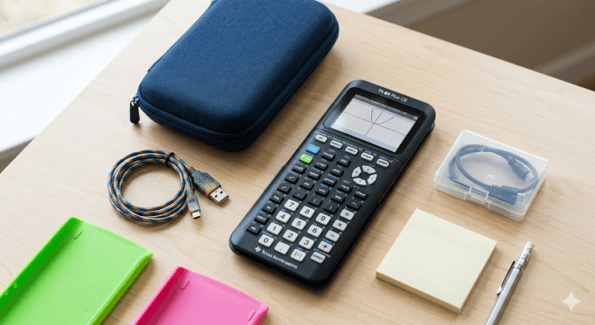
Your Texas Instruments calculator is more than just a study tool; it’s a powerful device capable of complex computations and problem-solving. To get the most out of your investment and ensure it remains a reliable companion throughout your academic or professional journey, consider the essential accessories that can enhance its performance, protection, and longevity.
From protective cases that shield your device from everyday wear and tear to advanced software that unlocks new analytical capabilities, a few strategic additions can significantly elevate your calculator experience. We’ll explore the key accessories that will help you maximize your TI calculator’s potential in 2026.
Beyond the Basics: Why Your TI Calculator Deserves an Upgrade in 2026
In today’s rapidly evolving academic and professional landscapes, the demands placed on calculators are constantly increasing. What was once sufficient for basic algebra may fall short for advanced calculus, statistics, or specialized engineering applications. Investing in accessories isn’t just about convenience; it’s about ensuring your TI calculator remains a relevant and powerful tool for years to come.
Consider the trajectory of technological advancements. New software updates, improved battery technologies, and more robust protective gear are regularly introduced, each designed to enhance the user experience and extend the lifespan of your device. By staying informed and equipping your calculator with the right accessories, you’re not just preparing for current challenges but also future-proofing your academic or professional performance. This proactive approach ensures you’re always equipped to tackle complex problems efficiently and effectively, avoiding the frustration of a lagging or underperforming device when it matters most.
Maximizing Your Investment in Texas Instruments Technology
Texas Instruments calculators are renowned for their durability and advanced features, making them a significant investment. To truly maximize this investment, it’s crucial to look beyond the calculator itself and consider the ecosystem of accessories that support it. These add-ons can significantly enhance both the functionality and the lifespan of your device, ensuring you get the most value from your purchase. For instance, specialized software can unlock advanced statistical analysis or programming capabilities that aren’t natively available, turning your calculator into a more versatile problem-solving tool.
Think of it like a high-performance vehicle; while the engine is the core, premium tires, a maintenance kit, and a protective cover all contribute to its optimal performance and longevity. Similarly, for your TI calculator, accessories like high-capacity batteries can ensure uninterrupted study sessions, and protective cases prevent costly damage. Exploring options for software and connectivity can also open up new avenues for data analysis and collaboration, directly impacting your efficiency and the depth of your work. This holistic approach ensures your Texas Instruments technology continues to serve you well, adapting to new challenges and opportunities.
The Evolving Needs of Students and Professionals
The academic curriculum and professional requirements are not static; they adapt to new discoveries, technologies, and methodologies. This evolution directly impacts the computational tools needed. For students, advanced placement courses, university-level STEM programs, and standardized tests like the SAT or AP exams often demand more sophisticated calculations, data manipulation, and graphing capabilities than basic models can provide. Similarly, professionals in fields like finance, engineering, and data science rely on calculators for complex modeling, statistical analysis, and even programming custom functions to streamline their workflows.
For example, a financial analyst might need to perform complex time-value-of-money calculations or regression analysis, while an engineering student might require the ability to perform matrix operations or solve differential equations. Accessories like specialized software or cables for connecting to computers can bridge these functional gaps, ensuring your TI calculator can meet these ever-increasing demands. Neglecting these evolving needs can lead to inefficiencies, missed opportunities, and a competitive disadvantage.
Essential Protection: Cases and Covers for Your TI Calculator
Your TI calculator is likely to experience daily transport in backpacks, briefcases, or even just loose in a study area. Without adequate protection, the screen can become scratched, the buttons can wear down prematurely, and in the worst-case scenario, internal components can be damaged by drops or impacts. Investing in a quality case or cover is a fundamental step in safeguarding your device, extending its lifespan, and maintaining its aesthetic appeal and functionality.
When selecting a case, consider the level of protection you require. For students who are constantly on the go, a durable, padded case with a hard shell offers superior impact resistance. Many cases also include internal organizational pockets for accessories like charging cables or USB drives. For those who prioritize portability and a slim profile, a soft sleeve or a fitted silicone cover can provide sufficient scratch and minor bump protection. Always check for compatibility with your specific TI calculator model to ensure a snug and secure fit, preventing any unnecessary jostling that could lead to damage. A well-chosen case not only protects your investment but also makes your calculator easier to handle and identify.
Powering Up: Batteries and Charging Solutions for Longevity
A calculator is only useful when it has power. The batteries that fuel your TI device are critical components, and understanding your options for powering and recharging them is essential for uninterrupted use. Whether you rely on disposable batteries or prefer the convenience of rechargeable solutions, making informed choices can prevent frustrating dead-calculator moments during crucial study sessions or exams.
The type and quality of batteries can significantly impact performance and longevity. Using low-quality batteries can lead to inconsistent power delivery, potentially affecting the accuracy of complex calculations or the responsiveness of the device. Furthermore, ensuring you have a reliable charging solution for rechargeable models or a readily available supply of replacements for disposable ones is key to maintaining operational readiness. This section will delve into the comparative benefits of different battery types and guide you towards the most effective charging methods for your specific TI calculator.
Rechargeable vs. Disposable Batteries: A Comparative Look
The decision between rechargeable and disposable batteries for your TI calculator hinges on several factors, including cost over time, environmental impact, and convenience. Disposable batteries, typically AA or AAA alkaline cells, offer the advantage of immediate replacement. When your calculator runs out of power, you can quickly swap in a fresh pair, making them ideal for users who need immediate, no-fuss power. The initial cost is low, but the cumulative expense of frequently purchasing replacements can add up significantly over the lifespan of the calculator.
Rechargeable batteries, often NiMH (Nickel-Metal Hydride) or lithium-ion integrated cells (especially in newer models like the TI-84 Plus CE), present a higher upfront investment but offer substantial savings in the long run. The ability to recharge hundreds or even thousands of times drastically reduces the ongoing cost and minimizes waste, making them a more environmentally conscious choice. However, they require a compatible charger and planning to ensure they are charged when needed. For models that come with built-in rechargeable batteries, ensuring you have the correct charger is paramount. The performance of rechargeable batteries can sometimes be more stable, especially in high-drain situations, compared to some disposable options.
Finding the Right Charger for Your Specific TI Model (e.g., TI-84 Plus CE)
For TI calculator models equipped with built-in rechargeable batteries, such as the widely used TI-84 Plus CE, selecting the correct charger is non-negotiable. Using an incompatible charger can not only fail to charge your device but, more critically, can potentially damage the battery or internal charging circuitry, leading to costly repairs or even rendering the calculator unusable. Texas Instruments typically uses proprietary charging ports or USB connections for their rechargeable calculators, and it’s essential to use the charger specifically designed or recommended for your model.
When purchasing a replacement or a spare charger, always verify the product specifications against your calculator’s manual or the manufacturer’s recommendations. Look for chargers that meet the exact voltage and amperage requirements. Genuine TI chargers are always the safest bet, but reputable third-party chargers that explicitly state compatibility with your calculator model can also be a viable option. Beware of generic chargers that claim to work with multiple devices, as they may not provide the precise power delivery needed. Ensuring you have the correct charging solution guarantees efficient power restoration and protects the integrity of your TI calculator.
Troubleshooting Common Battery Issues
Encountering battery-related problems with your TI calculator can disrupt your workflow. One common issue is a calculator that powers on briefly but then shuts off immediately; this often indicates weak or depleted batteries, even if they are new. Always try replacing the batteries with a fresh, high-quality set from a reputable brand. Another problem is inconsistent power, where the screen flickers or calculations seem to freeze intermittently. This can also be a sign of battery depletion or poor contact between the batteries and the calculator’s terminals.
To address poor contact, carefully remove the batteries and clean the battery compartment terminals and the battery surfaces with a pencil eraser or a dry, lint-free cloth. Ensure the batteries are inserted correctly according to the polarity markings (+/-). For rechargeable models, if the calculator isn’t charging, first confirm that the charger is securely connected to both the calculator and the power source. If it’s a USB charger, try a different USB port or a different compatible cable. If the issue persists after these steps, it might indicate a fault with the batteries themselves or the calculator’s internal power management system, necessitating a more thorough inspection or potential repair. Always consult your TI calculator accessories guide for model-specific troubleshooting.
Expanding Functionality: Software and Connectivity Accessories
While your TI calculator is a powerful standalone device, its capabilities can be dramatically expanded with the right software and connectivity accessories. These additions transform your calculator from a number-crunching tool into a versatile platform for data analysis, programming, and even project-based learning. By investing in these accessories, you unlock new potential for tackling complex academic assignments, conducting advanced research, or streamlining professional tasks.
Software, in particular, can introduce advanced functions not built into the calculator’s operating system, such as specialized statistical packages, financial analysis tools, or simulation programs. Connectivity accessories, like USB cables or wireless adapters, are the bridge that allows your calculator to interact with computers, other calculators, or even data collection devices. This interoperability is key for transferring data, uploading custom programs, updating firmware, and sharing work with peers or instructors. Exploring these options means your TI calculator can grow with your needs, providing a richer and more dynamic user experience.
The TI Connect™ Software Ecosystem: Unlocking More Potential
To truly maximize the capabilities of your Texas Instruments calculator, understanding and utilizing the TI Connect™ software ecosystem is paramount. This suite of tools bridges the gap between your calculator and your computer, enabling a wealth of functionalities that go far beyond basic computations. At its core, TI Connect™ software allows for seamless data transfer, program installation, and even firmware updates. This means you can easily move custom programs, datasets, and even operating system enhancements between your calculator and PC. For students, this is invaluable for backing up important work or sharing sophisticated graphing tools with classmates. Educators can leverage it to distribute class-specific programs or diagnostic tests, ensuring a standardized learning experience.
The primary components of this ecosystem are the TI Connect™ PC software (available for Windows and macOS) and its mobile counterpart, TI Connect™ CE app (for iOS and Android devices). The PC software is your central hub for managing calculator content. You can organize files, install new applications (apps) developed for TI calculators, and update the calculator’s operating system. This latter point is crucial for performance and security, ensuring your device has the latest features and bug fixes. For example, a firmware update might introduce new mathematical functions or improve the speed of graphical rendering, directly impacting your problem-solving efficiency.
When choosing to integrate with the TI Connect™ ecosystem, consider your primary use case. Are you a student needing to transfer complex homework assignments or backup your work? Or are you an educator looking to deploy specific educational programs to multiple devices? The decision criteria should align with these needs. A pitfall to avoid is neglecting regular software updates. Just as your smartphone receives updates, so too do TI calculators and their companion software. Failing to update can lead to compatibility issues with newer programs or prevent you from accessing advanced features. For example, ensure your TI-84 Plus CE calculator is running the latest OS version before attempting to install newly released educational apps, which often require specific OS builds. Getting started is straightforward: download the appropriate TI Connect™ software from the official Texas Instruments website, connect your calculator via a compatible USB cable, and follow the on-screen prompts.
Memory Boosters: SD Cards and USB Drives for Storing More Data
As the complexity of your mathematical tasks and the size of your datasets grow, the built-in memory of your TI calculator can quickly become a limiting factor. Fortunately, several accessories are designed specifically to expand your storage capabilities, allowing you to save more programs, data, and even multimedia files. For TI models equipped with an SD card slot, High Capacity (SDHC) and Extended Capacity (SDXC) cards offer a significant and cost-effective way to boost memory. These cards are readily available in various capacities, often ranging from 16GB to 128GB or more, providing ample space for even the most demanding users. When selecting an SD card, prioritize reputable brands and consider the card’s speed class, as a faster card can slightly improve data access times, particularly when loading large programs or datasets.
The decision to invest in an external memory solution hinges on your specific usage patterns. If you find yourself frequently deleting older programs to make space for new ones, or if you’re dealing with large statistical datasets for a research project, then an SD card or USB drive is an essential upgrade. A common pitfall is purchasing an incompatible memory card; always check your calculator’s manual or the product specifications to confirm the maximum supported SD card capacity and format (e.g., FAT32). For calculators that don’t feature an SD card slot, such as some older TI-83 models, USB flash drives can be utilized in conjunction with the TI Connectivity Cable and TI Connect™ software. This method allows you to transfer files between your computer and the calculator, effectively using the USB drive as a temporary storage or transfer medium.
Consider an example: a college engineering student working on a complex physics simulation might store multiple versions of their code, large data logs from experiments, and graphical representations of results. Without an SD card, they might be forced to constantly transfer files back and forth to their computer. With a 64GB SD card inserted, they can easily store all these resources directly on their calculator, accessing them instantly during lectures or study sessions. To implement this, simply ensure your calculator is powered off, insert the compatible SD card into its designated slot, power the calculator back on, and navigate to the memory management functions to verify the card is recognized. For USB transfers, ensure you have the correct TI connectivity cable and the TI Connect™ software installed on your computer.
Visual Aids: Projectors and Connectivity Cables for Presentations
For educators and students who need to present mathematical concepts or project calculator screens to a larger audience, specialized visual aid accessories are indispensable. The most common among these are TI graphic calculators, which can be connected to projectors or interactive whiteboards. This connectivity is typically achieved through a combination of TI Connectivity Cables and, if the projector doesn’t have a direct calculator input, a TI Presentation Link adapter or compatible display unit. The goal is to mirror the calculator’s screen in real-time, allowing for dynamic demonstrations of equations, graphs, and program execution.
When selecting presentation tools, the primary decision criterion is compatibility with your specific TI calculator model and your existing presentation hardware. Most modern TI calculators, like the TI-84 Plus CE, utilize a mini-USB port for connectivity, while older models might use a serial port or a proprietary connector. If you’re connecting to a projector, check if it supports direct input from a calculator or if it has standard VGA or HDMI ports that would require an adapter. A common pitfall is purchasing the wrong type of connectivity cable; an HDMI-to-calculator adapter is unlikely to exist, and you’ll need a cable specifically designed for TI devices, such as a USB-to-USB cable for direct computer-to-calculator transfers, or a cable that interfaces with a projector’s input. Another consideration is the reliability of the connection; ensure you have a secure physical connection to prevent accidental disconnections during a critical presentation.
For instance, a high school math teacher might use their TI-84 Plus CE connected to a projector to demonstrate how to graph trigonometric functions. They can dynamically alter parameters, show the resulting graph changes, and even step through complex algebraic manipulations. This live demonstration is far more engaging and effective than static textbook examples. Another example could be a student presenting a complex statistical analysis project, projecting their calculator screen to show the data, the regression analysis, and the resulting equation. To set this up, connect the appropriate TI connectivity cable from your calculator to your computer or presentation device. Ensure the TI Connect™ software is running on your computer if you are mirroring the screen via a computer connection. If directly connecting to a projector that accepts calculator input, follow the specific connection instructions for that device.
Specialized Tools: Styluses and Screen Protectors for Enhanced Interaction
Choosing the Right Stylus for Touchscreen TI Models
For TI calculator models featuring a touchscreen interface, such as the TI-Nspire CX series, a stylus significantly enhances the user experience. These devices transform the touch-sensitive screen into an interactive canvas, allowing for more precise input and direct manipulation of on-screen elements. The primary benefit of using a stylus is improved accuracy when selecting small buttons, drawing curves, or inputting complex data points compared to using a finger. Decision criteria for choosing a stylus should include the material of the tip – rubberized tips are gentler on the screen but might offer less precise feedback, while firmer tips provide better control but require a lighter touch. Ensure the stylus is designed for your specific TI model, as the screen sensitivity and capacitive technology can vary.
A common pitfall when using styluses is applying excessive pressure, which can potentially damage the screen over time. It’s also important to note that not all styluses are created equal; some may have a conductive tip that works with the calculator’s capacitive touchscreen, while others might be purely for aesthetic purposes. Always check product descriptions to confirm compatibility and functionality. For example, a student in an engineering course might use a stylus on their TI-Nspire CX to precisely plot points on a complex mathematical graph or to perform drag-and-drop operations within a programming environment. This level of interaction streamlines workflow and reduces frustration. To use a stylus effectively, hold it at a comfortable angle and use light, deliberate strokes. If your calculator came with a stylus, it’s likely designed for optimal performance with that specific device.
The Importance of Screen Protection for Everyday Use
Regardless of whether your TI calculator has a touchscreen or a traditional button interface, protecting the display is crucial for maintaining its longevity and functionality. A screen protector acts as a physical barrier against scratches, scuffs, and minor impacts that can occur during daily transport in backpacks or briefcases. The decision to use a screen protector is a proactive measure against potential damage that could obscure the display or even compromise the screen’s integrity. Factors to consider include the material (tempered glass offers superior protection against impacts, while plastic film is more budget-friendly), clarity (ensure it doesn’t significantly reduce screen visibility), and ease of application (look for protectors designed for a bubble-free installation).
A frequent pitfall for users is the belief that their calculator’s screen is inherently durable enough to withstand everyday wear and tear. However, even a small, sharp object in a backpack can cause irreversible scratches. Imagine a scenario where a student frequently uses their calculator in various environments, from a crowded classroom to a busy library. Without a screen protector, the display could accumulate numerous fine scratches over the academic year, making it harder to read graphs and data. This can negatively impact study efficiency and even lead to frustration. To apply a screen protector, thoroughly clean the calculator screen with the provided microfiber cloth, carefully align the protector, and gently press it down to adhere, working out any air bubbles. This simple step can significantly extend the usable life of your Texas Instruments calculator.
Alternatives to the Standard TI Experience (and When to Choose Them)
Exploring Other Graphing Calculator Brands
While Texas Instruments calculators dominate the academic landscape, particularly in North America, it’s beneficial to be aware of other brands that offer comparable functionality. Brands like Casio and HP present compelling alternatives with their own unique strengths. Casio, for instance, often features intuitive menu systems and robust financial functions, making them a strong contender for business and economics students. HP calculators, historically, have been lauded for their natural textbook display and powerful matrix capabilities, appealing to advanced math and science users. When considering these alternatives, evaluate the specific curriculum requirements and calculator policies of your institution. Some courses might explicitly permit or even recommend certain non-TI models, while others strictly enforce TI usage due to pre-loaded software or familiarity among instructors. Researching these policies upfront can save you significant hassle later.
The decision to explore other brands often hinges on a few key factors. If your primary need is for advanced statistical analysis or complex financial modeling, a non-TI calculator might offer specialized features that surpass the standard TI offerings. For example, some HP models integrate advanced programming environments that can be highly beneficial for computer science or engineering applications. The user interface is another crucial differentiator; some users find Casio’s button layout and menu navigation more straightforward than TI’s, while others prefer the established TI workflow. Consider the lifespan of your calculator needs; if you anticipate using the calculator beyond your current academic program, a versatile alternative might offer greater long-term value. Always check calculator accessory compatibility if you plan to invest in peripherals, as these are often brand-specific.
When a TI Calculator with Accessories is Still the Superior Choice
Despite the existence of viable alternatives, the pervasive presence and educational integration of Texas Instruments calculators often make them the most practical choice. Most high school standardized tests and college placement exams, such as the SAT and ACT, are designed with TI calculators in mind, and often only specific TI models are permitted. Furthermore, the vast majority of textbooks and online educational resources are developed assuming students are using TI calculators, with built-in examples and tutorials tailored to their specific operating system and functions. This widespread adoption means that teachers and professors are most familiar with TI calculators, facilitating easier support and instruction. For students, this translates to less time troubleshooting and more time focusing on mastering the academic material.
The power of TI calculators is significantly amplified by their extensive ecosystem of accessories. While a standalone calculator is capable, adding accessories can transform its utility. For instance, the TI-84 Plus family, a long-standing favorite, can be enhanced with wireless communication units for group activities or exams where data sharing is permitted. Specialized software, often available through third-party developers or directly from TI, can unlock advanced statistical, financial, or engineering applications not built into the base model. Consider the impact of a protective case; it guards your investment against drops and spills, a common hazard in student life. Even simple items like extra batteries or a reliable charging cable are crucial for ensuring your calculator is ready when you need it most. Exploring these calculator accessories that boost your study power can significantly extend the functionality and usability of your TI device.
Making the Smart Purchase: Buying Guides for TI Calculator Accessories
Ensuring Compatibility: What to Check Before You Buy
Purchasing accessories for your TI calculator requires careful attention to compatibility to avoid wasted money and frustration. The primary factor to consider is the specific model and operating system version of your calculator. Accessories designed for a TI-84 Plus CE, for example, may not work with an older TI-84 Plus or a TI-89 Titanium. Manufacturers often clearly list the compatible calculator models on their product packaging or online listings. Look for details like “compatible with TI-84 Plus, TI-84 Plus Silver Edition, TI-84 Plus CE” or similar specifications. For software, ensure the operating system version (e.g., OS 2.53 MP for TI-84 Plus) matches what your calculator runs. You can typically find your calculator’s OS version in the system information menu.
Beyond the calculator model itself, consider the type of accessory. For charging cables and power adapters, verify the connector type and voltage requirements. Using an incorrect charger can damage your calculator’s battery or internal components. When buying protective cases, check dimensions to ensure a snug fit without impeding access to buttons or ports. If you’re purchasing link cables for data transfer between calculators or to a computer, confirm whether they are serial or USB-based, and if they require specific drivers for your operating system. Many websites that sell accessories, including reputable online retailers, provide compatibility checkers or detailed guides. Always err on the side of caution and double-check compatibility before completing your purchase to ensure a seamless integration with your TI calculator.
Where to Find Genuine Texas Instruments Accessories Online
When seeking genuine Texas Instruments accessories, your first stop should be official retailers and trusted online marketplaces. The Texas Instruments website itself, while primarily focused on calculator sales, often provides links or information on authorized distributors for accessories. Major electronics retailers like Amazon, Best Buy, and Walmart are reliable sources for a wide range of TI accessories, from charging cables and protective cases to batteries and software. When purchasing from these platforms, pay close attention to the seller’s reputation. Look for third-party sellers with high ratings and positive reviews to minimize the risk of receiving counterfeit or incompatible products. Many authorized TI dealers also maintain their own online stores, offering a direct and trustworthy purchasing experience.
For more specialized accessories or if you’re looking for a broader selection, consider dedicated educational supply stores or calculator specialty websites. These vendors often carry a comprehensive inventory of TI-branded items and are knowledgeable about compatibility issues. For instance, if you need a specific software application for advanced engineering calculations, a specialty site might be your best bet. Always be wary of extremely low prices from unverified sources, as these can be indicators of counterfeit goods. Purchasing directly from authorized distributors or well-known retailers ensures that you are receiving authentic, high-quality accessories that are designed to work seamlessly with your Texas Instruments calculator, protecting your investment and ensuring optimal performance.
Maximizing Your Calculator’s Lifespan and Value in 2026
A Checklist for Essential TI Calculator Accessories
To ensure your TI calculator serves you well throughout its lifespan, a few key accessories can make a significant difference. First on the list is a durable protective case. Whether it’s a hard shell or a padded sleeve, this shields your calculator from accidental drops, bumps, and scratches, which are common in academic environments. Next, consider a reliable charging solution. For rechargeable models like the TI-84 Plus CE, a high-quality USB charging cable and AC adapter are essential to keep your battery powered for extended study sessions or exams. For calculators that use replaceable batteries, stocking up on high-performance alkaline or NiMH rechargeable batteries can prevent last-minute rushes to the store.
Data transfer and connectivity are also crucial. A calculator-to-computer link cable (often USB) is vital for backing up your calculator’s memory, transferring programs, and updating the operating system. This ensures you have the latest features and security patches. For collaborative learning, a calculator-to-calculator link cable can be invaluable for sharing notes, programs, or data with classmates during group projects or study sessions. Finally, specialized software can unlock advanced functionalities. While not a physical accessory, investing in relevant software applications (e.g., for advanced statistics, finance, or physics) can dramatically enhance your calculator’s utility, making it a more powerful tool for complex problem-solving. This combination of physical protection and functional enhancement is key to maximizing your calculator’s value.
Long-Term Care and Maintenance Tips
Prolonging the life of your TI calculator involves consistent, albeit simple, maintenance practices. Regularly clean the screen and keypad with a soft, lint-free cloth. Avoid using harsh chemicals or abrasive materials, which can damage the display or buttons. For deeper cleaning, a slightly damp cloth (water only) can be used, ensuring it’s not overly wet, and that no liquid seeps into any openings. Periodically, back up your calculator’s memory to a computer or other storage device. This is crucial not only for data safety in case of hardware failure but also before performing operating system updates, which can sometimes reset the device. Use the appropriate link cable and software provided by Texas Instruments or a reputable third-party provider for this process.
Store your calculator properly when not in use. Avoid leaving it in extreme temperatures, such as a hot car or a freezing backpack, as this can degrade the battery and internal components. A protective case is your first line of defense against physical damage, so always use it when transporting your calculator. If your calculator uses replaceable batteries, replace them promptly when they become weak to avoid performance issues or potential corrosion from old batteries leaking. For rechargeable models, avoid fully draining the battery regularly; charging it when it’s at a moderate level can help preserve battery health over time. By adhering to these care guidelines, you ensure your TI calculator remains a reliable tool for years to come.